
The green economy is no longer an emerging idea. It is becoming one of the defining growth stories of the decade.
Across the UK, investment in clean energy, nature recovery, low-carbon infrastructure and sustainable business models is accelerating. The transition to net zero is reshaping industries, supply chains and workforces, creating new opportunities for businesses that are ready to lead.
But as the green economy grows, one question becomes increasingly urgent: who will have the skills, confidence and experience to power it?
The future of the green economy will not be built by technology and investment alone. It will depend on people. It will depend on whether young people today can see a place for themselves in the jobs, industries and landscapes of tomorrow.
The green economy is becoming mainstream
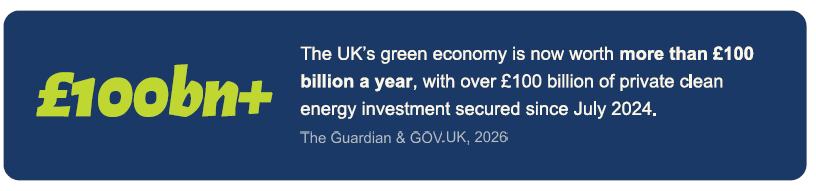
Recent analysis shows the scale of the opportunity. The UK’s green economy is now reported to be worth more than £100 billion a year, while government has announced more than £100 billion of private clean energy investment since July 2024.
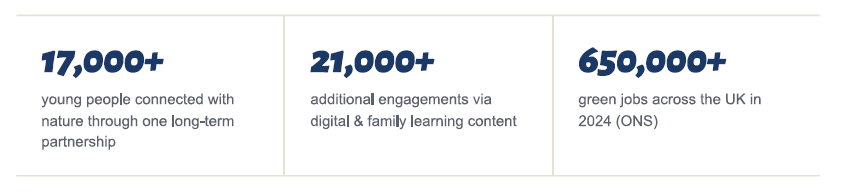
At the same time, the House of Commons Library notes that the green economy sits at the centre of the UK’s plans for economic growth and net zero. The Office for National Statistics estimates there were more than 650,000 green jobs in the UK in 2024, alongside 118,000 businesses in the low carbon and renewable energy economy.
This is not a niche sector. It is a whole-economy transition. From renewable energy and clean transport to sustainable construction, regenerative agriculture, climate adaptation, biodiversity restoration and circular business models, the green economy is changing what businesses need from their people.
Deloitte’s work on green skills makes the challenge clear: as jobs become greener, green skills will increasingly be needed beyond specialist sustainability roles. Marketing, finance, HR, technology, operations and leadership will all need to understand how sustainability creates value. Green skills are moving from the margins into the mainstream of business.
That shift creates both a responsibility and an opportunity. Businesses need to develop the workforce they have today. But they also need to help inspire and equip the workforce of tomorrow.
Green skills start with connection
When we talk about green skills, it is easy to think only about technical qualifications: renewable energy engineering, ecological surveying, carbon accounting or land management. Those skills matter. But the foundations often start much earlier.
They start when a young person has the chance to understand the natural world. To spend time outdoors. To see how landscapes are cared for. To learn that nature is not separate from the economy, health, communities or the future of work.
For many young people, especially those from under-represented communities, that first meaningful experience of nature can be transformative. It can build confidence, improve wellbeing, spark curiosity and open up new ideas about what their future could look like.
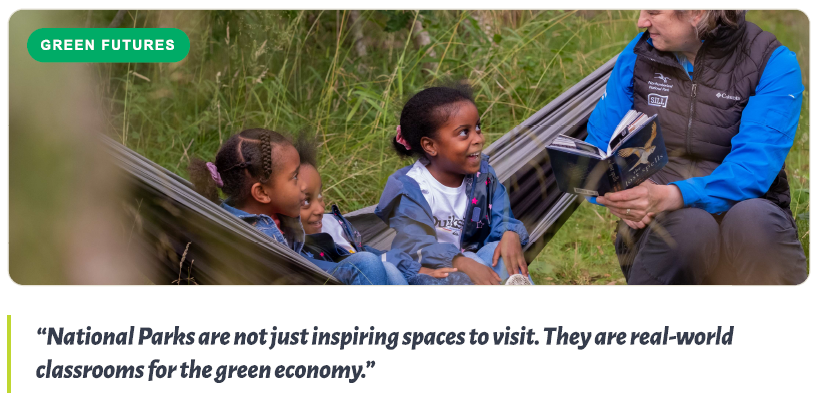
This is where the UK’s 15 National Parks have a unique role to play. The National Parks are living, working landscapes. They are places where nature, communities, farming, tourism, heritage, land management, climate action and local economies meet. They are visited more than 90 million times each year, but they are also places of deep expertise, long-term stewardship and practical delivery.
A national platform with local delivery
National Parks Green Futures is designed to connect young people with these landscapes, and with the skills, confidence and experiences they need for a greener future.
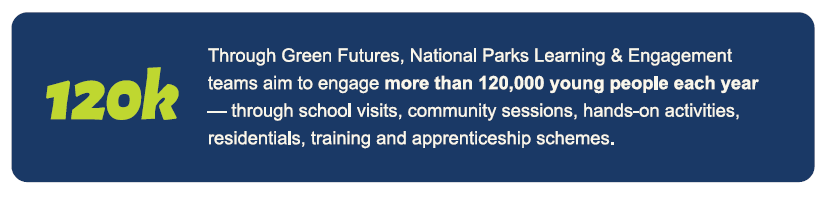
The ambition is simple: to help young people connect with nature, build confidence, develop green skills and see a future for themselves in the green economy.
The delivery is practical. Green Futures can support young people to take part in conservation activities, outdoor learning, youth ranger programmes, green careers days, community projects, residential experiences and hands-on skills sessions. It can help remove barriers such as transport costs. It can support young people who may not otherwise have the chance to access National Parks or explore green career pathways.
And it is already building on a proven model. Partnerships with the National Parks have already shown what business support can deliver. One long-term partnership helped more than 17,000 young people connect with nature, while generating more than 21,000 additional engagements through digital and family learning content. Another partnership supported more than 2,000 young people through green skills and youth engagement projects, alongside practical nature restoration activity. The Recharge in Nature partnership with BMW demonstrated how business support can combine youth engagement, lower-carbon access, nature interventions and green roles into a visible, measurable programme of impact.
These are not abstract commitments. They are young people attending green careers days, taking part in conservation tasks, joining youth ranger schemes, learning from National Park staff, discovering local landscapes and seeing new possibilities for their future.
Why this matters to business
For corporate partners, Green Futures offers more than a funding opportunity. It is a way to turn sustainability and social value commitments into real-world impact.
Many businesses have ambitious ESG strategies. They are investing in net zero, nature, skills, inclusion and community impact. But they also need credible ways to show that these commitments are delivering visible outcomes beyond their own operations.
Green Futures gives businesses a national platform with trusted local delivery. It connects corporate ambition with practical programmes across the UK’s 15 National Parks. It offers rich storytelling, employee engagement potential, volunteering opportunities, measurable outcomes and a clear link to the next generation.
For businesses thinking seriously about the future of the green economy, this is a strategic opportunity. Supporting Green Futures means helping young people build the confidence, awareness and early skills that can lead into future green careers. It means investing in communities and landscapes. It means contributing to a more inclusive transition, where more young people can see themselves as part of a sustainable future.
It also sends a powerful message: that the green economy is not only about technology, infrastructure and markets. It is about people, places and the choices we make now.
The next generation is ready. They need opportunity.
The green economy is growing. Investment is rising. Businesses are adapting. Demand for green skills is increasing. But opportunity does not reach every young person equally.
Some young people grow up with easy access to nature, outdoor learning and career networks. Others face barriers of cost, transport, confidence, knowledge or representation. If we want the green economy to be resilient, inclusive and truly national, we need to widen access now.
National Parks Green Futures is one way businesses can help do that. By becoming a Green Futures Partner, companies can directly support learning activities that help young people connect with nature, build skills and develop a sense of possibility.
The future green economy will need people who understand the value of nature, the importance of place and the power of long-term stewardship. That future starts with the next generation – and the UK’s National Parks are ready to help inspire them.
This article draws on evidence and insight from:
- The Guardian, “UK’s growing green economy worth more than £100bn a year, research finds” (2026);
- GOV.UK, “Government has secured £100 billion of clean energy investment” (2026);
- House of Commons Library, “The green economy” (2026);
- Green Economy, business support to accelerate net zero (accessed 2026);
- Deloitte UK, “Green skills for the green economy” (accessed 2026);